
Running a business often begins with passion, creativity, and a strong vision for solving a problem. Many entrepreneurs launch their businesses with excitement and determination, believing their product or service will make a meaningful difference for customers. In the early stages, this enthusiasm can carry a business surprisingly far.
However, as the business begins to grow, many entrepreneurs quickly discover that passion alone is not enough. Tasks multiply, responsibilities expand, and daily operations can start to feel chaotic. Emails pile up, customer requests increase, and keeping track of everything becomes more difficult.
This is where business systems become essential.
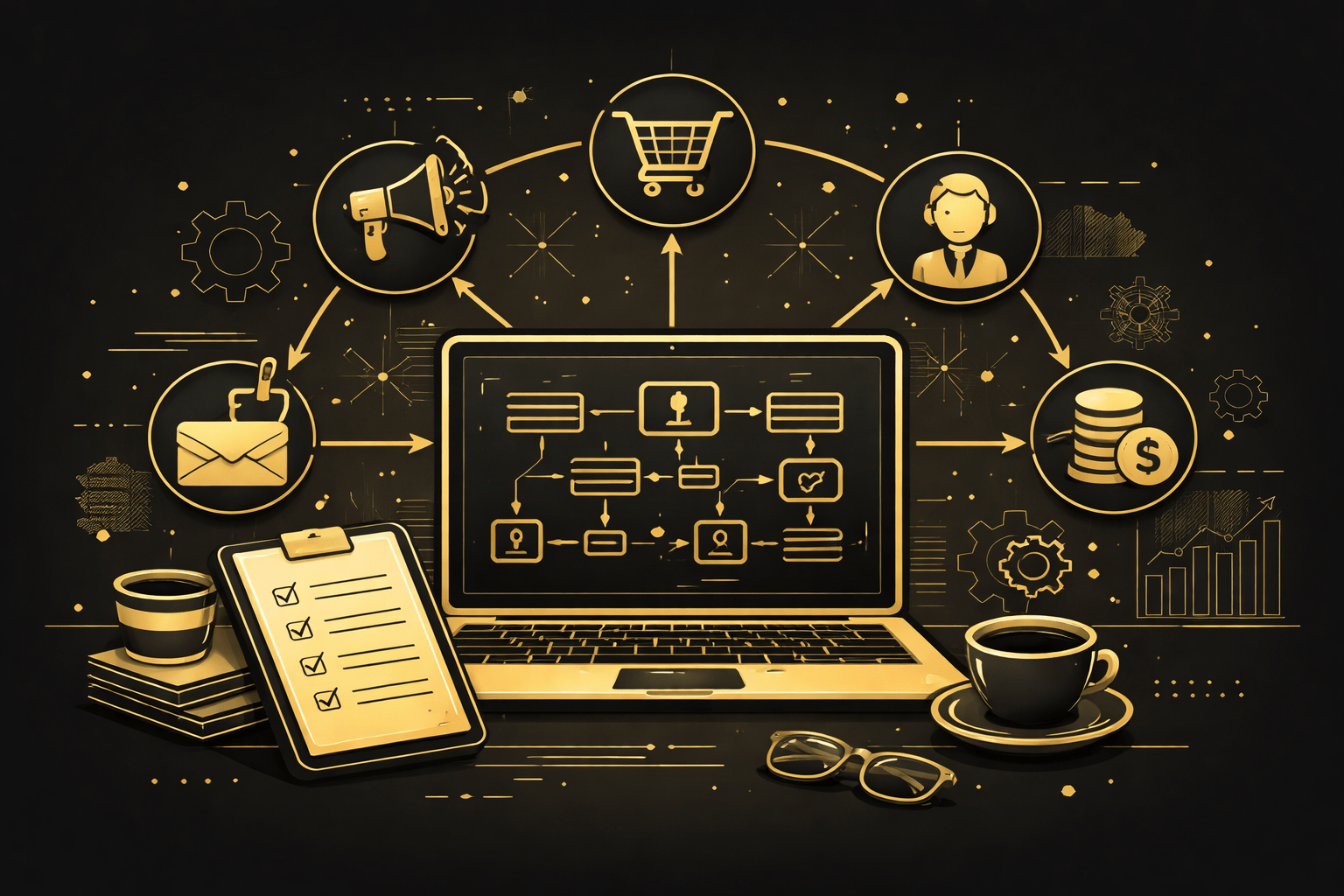
Business systems provide the structure that helps a business operate smoothly and grow sustainably. Instead of relying on memory or improvisation, systems create repeatable processes that ensure tasks are completed consistently and efficiently.
In this guide, we will explore what business systems are, why they matter for entrepreneurs, and how implementing them can transform a stressful business into a streamlined and scalable operation.
What Are Business Systems?
To begin with, business systems are repeatable processes designed to complete specific tasks within a business consistently and efficiently.
In simple terms, a system outlines four important elements:
-
What needs to be done
-
How it should be done
-
Who is responsible for doing it
-
When it should happen
Rather than figuring out how to complete a task each time it appears, a business system provides a clear set of instructions that anyone in the organization can follow.
For example, a business system might define:
-
How new customers are onboarded
-
How invoices are created and sent
-
How marketing campaigns are launched
-
How customer support requests are handled
-
How employees are trained and managed
When these processes are documented and standardized, they become systems that improve efficiency and reduce confusion across the organization.
In other words, systems turn scattered tasks into organized workflows.
Why Business Systems Are Essential for Entrepreneurs
While many entrepreneurs initially operate without formal systems, this approach rarely works long term. As the business grows, the lack of structure can quickly create operational challenges.
Fortunately, implementing business systems solves many of these problems. Let’s explore why systems are so important.
Systems Save Time
First and foremost, business systems save time.
Without systems, entrepreneurs often spend valuable time deciding how to handle tasks that occur repeatedly. For example, each new customer might require figuring out the onboarding process from scratch. Similarly, sending invoices or responding to customer inquiries might involve repeated decision-making.
Over time, these small decisions create significant inefficiencies.
However, when a system is in place, the process is already defined. Instead of reinventing the wheel, you simply follow the established steps.
As a result, tasks are completed faster, and entrepreneurs gain more time to focus on strategy, growth, and innovation.
Systems Improve Consistency
Equally important, business systems improve consistency.
Customers expect reliable experiences when interacting with a business. If service quality varies from one interaction to another, trust can quickly decline.
For instance, imagine ordering from a company where one shipment arrives immediately while another takes weeks. Similarly, one customer might receive detailed support while another receives a vague response.
This inconsistency can damage a company’s reputation.
Business systems solve this problem by ensuring that every task follows the same proven process. Whether it’s customer support, product delivery, or marketing communication, systems help maintain consistent quality.
Consequently, customers develop greater confidence in the business.
Systems Reduce Stress
Another major advantage of business systems is reduced stress.
Many entrepreneurs experience mental overload because everything in the business exists in their heads. They must remember deadlines, processes, customer details, and operational tasks simultaneously.
As a result, running the business can feel overwhelming.
However, when systems are documented, the pressure decreases significantly. Instead of relying on memory, entrepreneurs can rely on structured workflows.
This means fewer forgotten tasks, fewer mistakes, and far less mental clutter.
Ultimately, systems create a calmer and more manageable work environment.
Systems Make Delegation Possible
In addition, business systems make delegation far easier.
Many entrepreneurs hesitate to delegate tasks because they worry that others will not complete them correctly. While this concern is understandable, the root problem is often the absence of a clear process.
Without documented systems, employees must guess how tasks should be performed. This naturally leads to mistakes and frustration.
On the other hand, when a process is clearly documented, anyone can follow the instructions step by step.
Consequently, training becomes easier, employees gain confidence, and entrepreneurs can delegate tasks without constant supervision.
Systems Enable Business Growth
Perhaps most importantly, systems enable businesses to scale.
A business that relies entirely on its founder eventually reaches a growth limit. There are only so many hours in a day, and a single person can only manage so many responsibilities.
However, business systems remove this limitation.
Because tasks are standardized and repeatable, multiple team members can perform them efficiently. New employees can quickly learn established systems instead of starting from scratch.
As a result, the business can grow without becoming chaotic.
Examples of Business Systems
To better understand business systems, it helps to examine how they apply across different areas of a company.
Marketing Systems
Marketing systems ensure that customer acquisition happens consistently.
For example, a marketing system might include:
-
A weekly blog publishing schedule
-
A social media content calendar
-
Email marketing campaigns
-
Lead generation funnels
Rather than marketing sporadically, these systems ensure that promotional activities occur regularly.
Sales Systems
Similarly, sales systems guide prospects through a structured buying process.
Examples include:
-
Lead qualification procedures
-
Sales call scripts or frameworks
-
Proposal templates
-
Follow-up email sequences
With a strong sales system in place, businesses can increase conversion rates and ensure no potential customers are overlooked.
Customer Service Systems
Customer service systems define how businesses communicate with and support customers.
Examples include:
-
Customer onboarding workflows
-
Support ticket systems
-
Complaint resolution procedures
-
Refund and return policies
Because these processes are standardized, customers receive reliable and professional service.
Operations Systems
Operational systems keep the daily activities of the business running smoothly.
Examples include:
-
Order fulfillment procedures
-
Inventory management processes
-
Vendor communication guidelines
-
Quality control checklists
Without operational systems, businesses often become disorganized as order volume increases.
Financial Systems
Finally, financial systems help businesses manage money responsibly.
Examples include:
-
Invoicing workflows
-
Expense tracking procedures
-
Payroll processes
-
Budget planning systems
These systems provide financial clarity and reduce the risk of costly mistakes.
Systems vs Goals: Understanding the Difference
Although the terms are sometimes used interchangeably, systems and goals are not the same thing.
A goal represents a desired outcome.
For example:
-
Reach $100,000 in annual revenue
-
Gain 1,000 new customers
-
Launch a new product
However, a system is the process that helps achieve that outcome.
For instance:
Goal: Generate more leads.
System: Publish one SEO-optimized blog article each week, promote it on social media, and collect emails through a lead magnet.
In short, goals provide direction, while systems provide the daily actions that produce results.
Signs Your Business Needs Better Systems
If you are unsure whether your business needs better systems, there are several warning signs to watch for.
For example, you may notice:
-
Feeling overwhelmed by daily operations
-
Frequently forgetting important tasks
-
Employees asking the same questions repeatedly
-
Inconsistent work quality
-
Difficulty delegating tasks
-
Business growth creating more chaos instead of efficiency
These signs usually indicate that processes exist informally but have not yet been documented or standardized.
How to Start Building Business Systems
Fortunately, building business systems does not require complicated software or expensive consultants.
In fact, many entrepreneurs can begin with simple tools and basic documentation.
First, identify tasks that occur repeatedly in your business. These might include responding to customer emails, publishing content, or sending invoices.
Next, document the steps required to complete each task. Even a simple checklist can become a powerful system.
Then, consider using tools such as project management software, CRM platforms, or workflow automation tools to organize and streamline these systems.
Finally, remember that systems should evolve. As your business grows, continue refining your processes to improve efficiency.
The Long-Term Benefits of Business Systems
Although building systems requires an initial investment of time, the long-term benefits are substantial.
Entrepreneurs who prioritize systems often experience:
-
Increased productivity
-
More predictable revenue
-
Reduced operational stress
-
Faster team training and onboarding
-
Improved customer experiences
-
Greater flexibility and freedom
Instead of constantly reacting to problems, the business begins to operate with clarity and structure.
Final Thoughts
Entrepreneurship is exciting, but without structure it can quickly become overwhelming.
Business systems provide the framework that turns scattered efforts into organized and repeatable processes. They allow entrepreneurs to focus on growth, strategy, and innovation rather than constant problem-solving.
Ultimately, whether you are running a solo business or leading a growing team, building strong business systems is one of the smartest decisions you can make.
Because successful businesses are not built on effort alone.
They are built on systems.
Discover more at https://systemsforentrepreneurs.com
